
Introduction: How Bail Bonds Work in North Carolina – A Simple Explanation
If you have never been through the criminal justice system, the bail process can seem confusing. You may hear terms like “surety bond,” “cash bond,” “unsecured bond,” and “premium.” But understanding how bail bonds work in North Carolina is essential if you want to secure a loved one’s release quickly and affordably. This guide breaks down everything you need to know: the types of bonds, the legal premium cap, the role of a cosigner, and what happens if the defendant fails to appear in court.
By the end of this article, you will know exactly how bail bonds work in North Carolina – and you will be ready to call DJ’s Bail Bonds at 919-986-1547 for immediate help.
What Is a Bail Bond? The Legal Definition
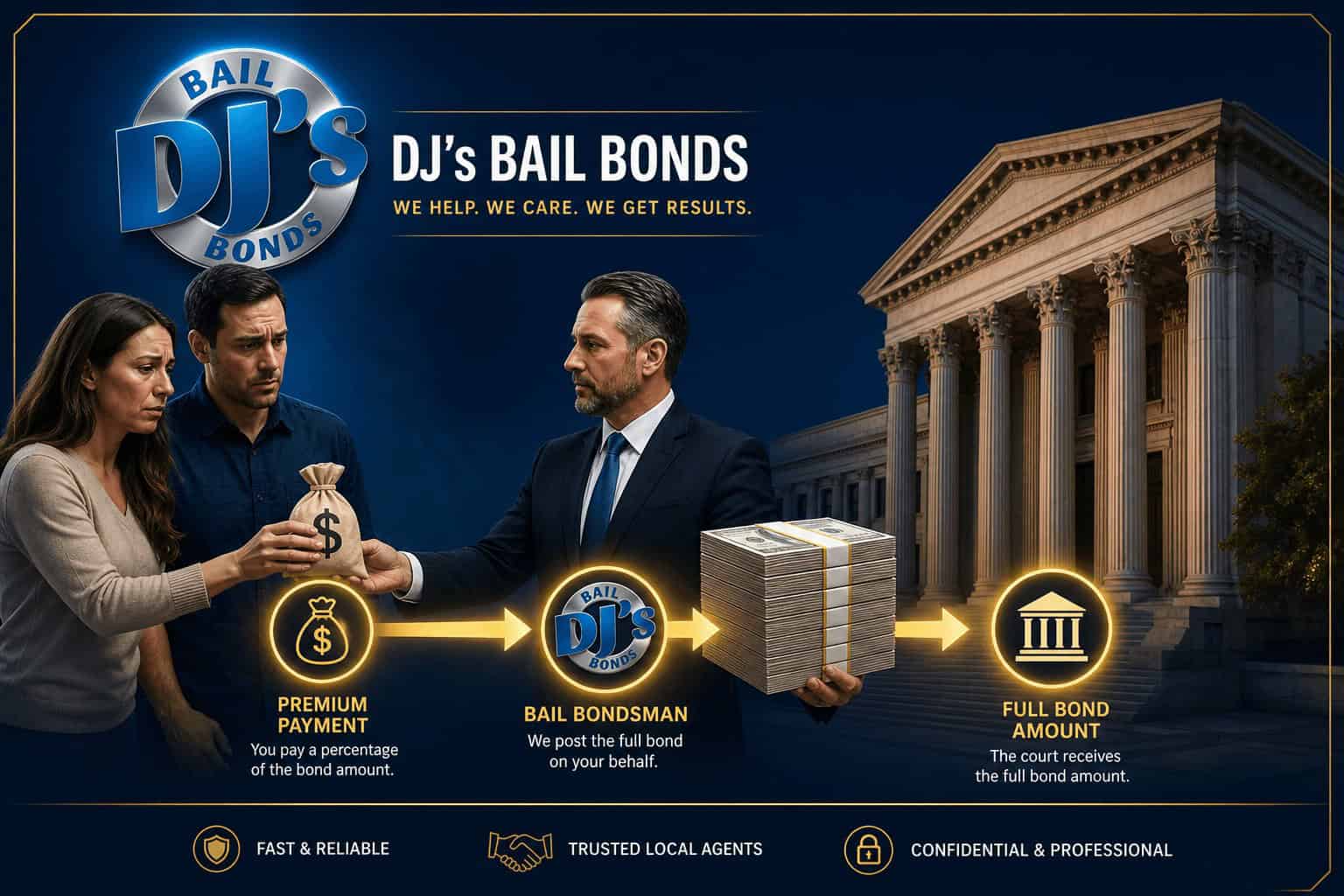
n North Carolina, a bail bond is a legally binding document that guarantees a defendant will appear in court. How bail bonds work in North Carolina starts with the concept of “bail” – the amount of money a judge sets to ensure the defendant’s return. If the defendant cannot pay the full bail amount, they can use a surety bond provided by a licensed bail bondsman.
The bondsman posts the full bail amount to the court. In exchange, the defendant or a cosigner pays the bondsman a non-refundable premium (typically 10-15% of the bail). This system allows defendants to be released without tying up tens of thousands of dollars in cash.
The legal basis for bail bonds is found in North Carolina General Statutes Chapter 15A. This statute outlines the rights of defendants and the procedures for bail.
The Three Main Types of Bail in North Carolina
To fully understand how bail bonds work in North Carolina, you need to know the three most common types of release conditions set by magistrates and judges.
1. Unsecured Bond (Release on Written Promise)
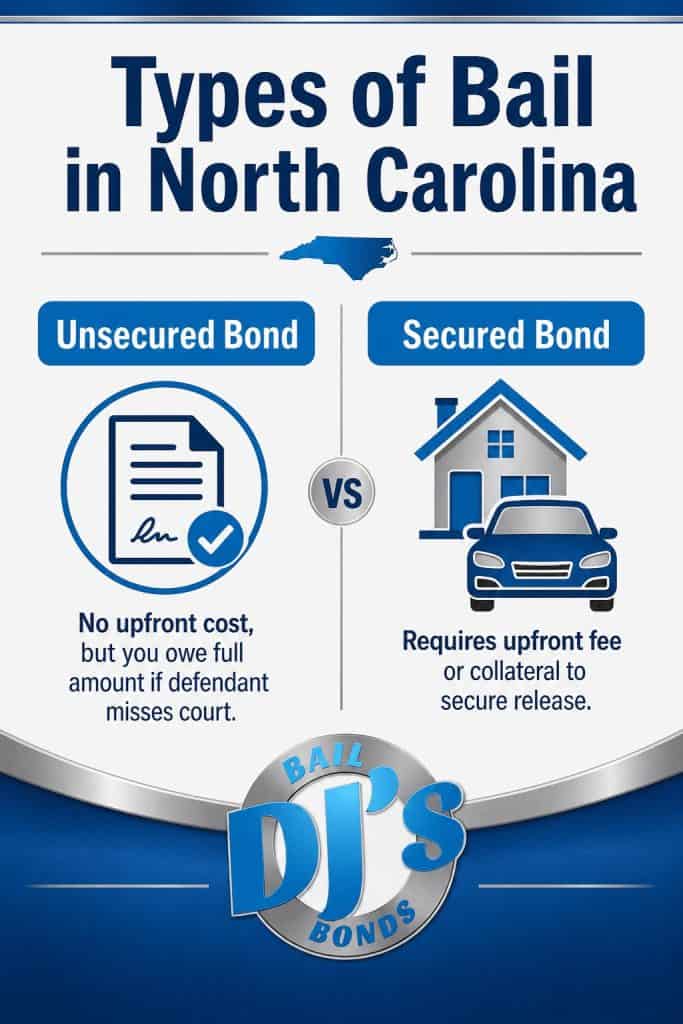
An unsecured bond does not require the defendant to pay any money upfront. Instead, the defendant signs a document promising to pay the full bond amount if they fail to appear in court. This is typically reserved for low-risk, first-time offenders charged with minor misdemeanors.
2. Secured Bond – Surety Bond (The Most Common Type)
This is what most people mean when they ask how bail bonds work in North Carolina. A licensed bail bondsman posts the full bail amount as a surety. The defendant or cosigner pays a non-refundable premium (capped at 15% by law) and may provide collateral. This is the service DJ’s Bail Bonds provides 24/7.
3. Cash Bond
The defendant or a family member pays the entire bail amount directly to the court in cash. This money is refundable (minus administrative fees) after all court dates are met. However, few families have thousands of dollars in cash available immediately.
The 15% Premium Cap – A Critical Consumer Protection
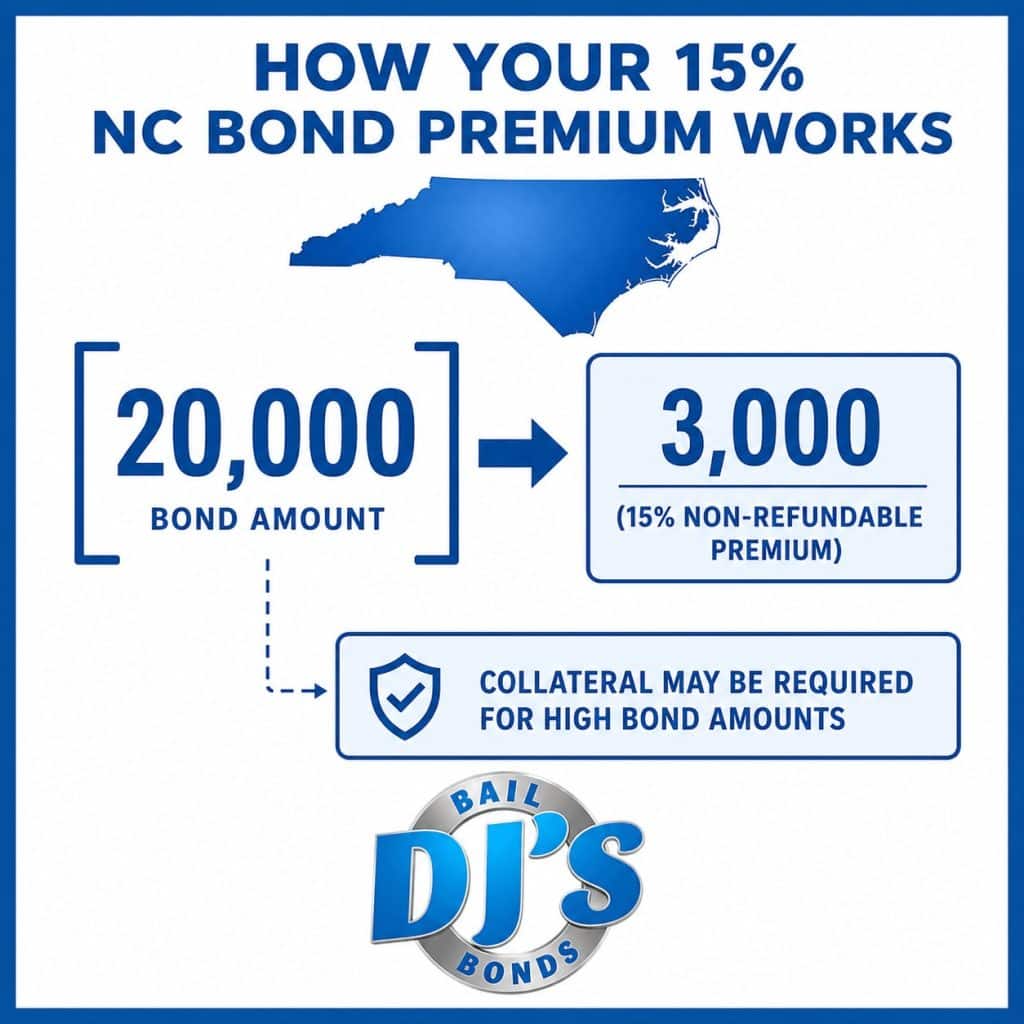
ne of the most important consumer protections in North Carolina is the 15% premium cap found in N.C. Gen. Stat. § 58-71-95. This law states that a bail bondsman cannot charge more than 15% of the total bond amount as a fee.
Example: If bail is set at $10,000, the maximum premium is $1,500. Some agencies charge the full 15% regardless of risk. DJ’s Bail Bonds often offers lower rates—as low as 10% for low-risk defendants—saving you hundreds of dollars.
What the premium covers: The premium is the cost of the bondsman’s service, including posting the full bond, monitoring court dates, and assuming the financial risk if the defendant fails to appear. The premium is non-refundable even if the case is dismissed or the defendant is found not guilty.
Verify any bondsman’s license through the North Carolina Department of Insurance. This is the official regulator for all bail bondsmen in the state.
The Role of the Cosigner (Indemnitor)
How do bail bonds work in North Carolina when the defendant has no money or assets? That is where a cosigner (also called an indemnitor) comes in. The cosigner signs the bond agreement and agrees to:
Pay the non-refundable premium.
Ensure the defendant appears in court.
Be liable for the full bond amount if the defendant fails to appear.
Provide collateral (car title, property deed, jewelry) if requested.
Becoming a cosigner is a serious financial commitment. You should only cosign for someone you trust completely.
For a deeper dive, read our detailed guide: The Role of a Cosigner in North Carolina Bail Bonds.
Collateral – When and Why It Is Required
Not every bond requires collateral. But for high bond amounts (e.g., $50,000 or more) or defendants with a history of missing court, a bondsman may ask for collateral equal to the full bond amount. Common forms of collateral include:
Vehicle titles (paid-off cars or motorcycles)
Property deeds (home equity)
Jewelry, gold, or valuable collectibles
Bank accounts or certificates of deposit
Collateral is returned to the cosigner once the bond is exonerated – meaning the case is over and all court dates were met. If the defendant fails to appear and cannot be located, the bondsman may seize and liquidate the collateral to recover the forfeited bond amount.
What Happens If the Defendant Misses Court? Bond Forfeiture Explained
When a defendant fails to appear (FTA), the court enters a bond forfeiture. Under North Carolina law (N.C. Gen. Stat. § 15A-544.3), the bondsman and cosigner have about 150 days to locate the defendant and bring them back to court. If they succeed, the forfeiture is “set aside” – though court costs may apply. If they fail, a final judgment is entered, and the cosigner owes the full bond amount.
This is why choosing a reputable bondsman like DJ’s Bail Bonds matters. We actively help cosigners track court dates and remind defendants of their obligations, reducing the risk of forfeiture.
Read the full text of the forfeiture statute at the North Carolina General Assembly website (search for §15A-544.3).
Why You Should Choose a Licensed, Local North Carolina Bondsman
Not all bail bondsmen operate ethically. Some charge hidden fees, fail to explain cosigner liability, or even participate in scams. When you call DJ’s Bail Bonds, you get:
Licensed agents verified by the NC Department of Insurance.
24/7 availability – we answer nights, weekends, and holidays.
Transparent pricing – we explain the 15% cap and any additional costs upfront.
Local expertise – we know the Wake County Detention Center, Cumberland County Jail, and every other facility in the state.
Do not let confusion about how bail bonds work in North Carolina delay your loved one’s release. Call DJ’s Bail Bonds now at 919-986-1547 for a free, no-obligation consultation. We will walk you through the process, answer every question, and post the bond as soon as bail is set. Visit our contact page or call now.
FAQ: How Bail Bonds Work in North Carolina
What is the difference between bail and a bond in North Carolina?
Bail is the dollar amount set by the court. A bond is the legal document (often posted by a bondsman) that guarantees payment of that bail.
How much does a bail bond cost in North Carolina?
By law, the premium cannot exceed 15% of the total bond amount. Most agencies charge between 10% and 15%.
For a $10,000 bond, that is $1,000 to $1,500.
Is the bail bond premium refundable?
No. The premium is a non-refundable service fee for posting the bond and assuming financial risk.
What is a secured bond?
A secured bond requires payment or collateral. A surety bond from a bondsman is a type of secured bond.
What is an unsecured bond?
An unsecured bond requires no upfront money. The defendant signs a promise to pay the full amount if they miss court.
Can I get a bail bond without a cosigner?
Sometimes. For low bond amounts or defendants with excellent credit, a bondsman may issue a bond without a cosigner.
What happens to collateral after the case ends?
Collateral is returned to the cosigner once the bond is exonerated (all court dates met and case closed).
How long does it take to get released after paying a bondsman?
After the bond is posted, jail release typically takes 1 to 4 hours, depending on jail workload.
Does DJ’s Bail Bonds serve all of North Carolina?
Yes. We are licensed in all 100 counties, including Wake, Cumberland, Mecklenburg, Guilford, and Forsyth.
Where can I verify a bail bondsman’s license in North Carolina?
Use the official North Carolina Department of Insurance license lookup.