

Add Your Heading Text Here
Lorem ipsum dolor sit amet, consectetur adipiscing elit. Ut elit tellus, luctus nec ullamcorper mattis, pulvinar dapibus leo.
Introduction: What It Really Means to Be a North Carolina Bail Bond Cosigner
When a loved one is arrested, stepping up as a north carolina bail bond cosigner (also called an indemnitor) is often the only way to secure their release. But many people sign the paperwork without fully understanding the legal and financial weight they are accepting. A north carolina bail bond cosigner is not just a reference or a character witness – they become a legally responsible party to the court and the bondsman. If the defendant fails to appear, the cosigner can lose thousands of dollars, their collateral, and even face civil lawsuits.
This guide explains everything you need to know before becoming a north carolina bail bond cosigner: your duties, the risks of forfeiture, how collateral works, and how to protect yourself. By the end, you will know whether cosigning is the right decision for your family – and if so, how to do it safely with DJ’s Bail Bonds (call 919-986-1547).
What Is a North Carolina Bail Bond Cosigner?
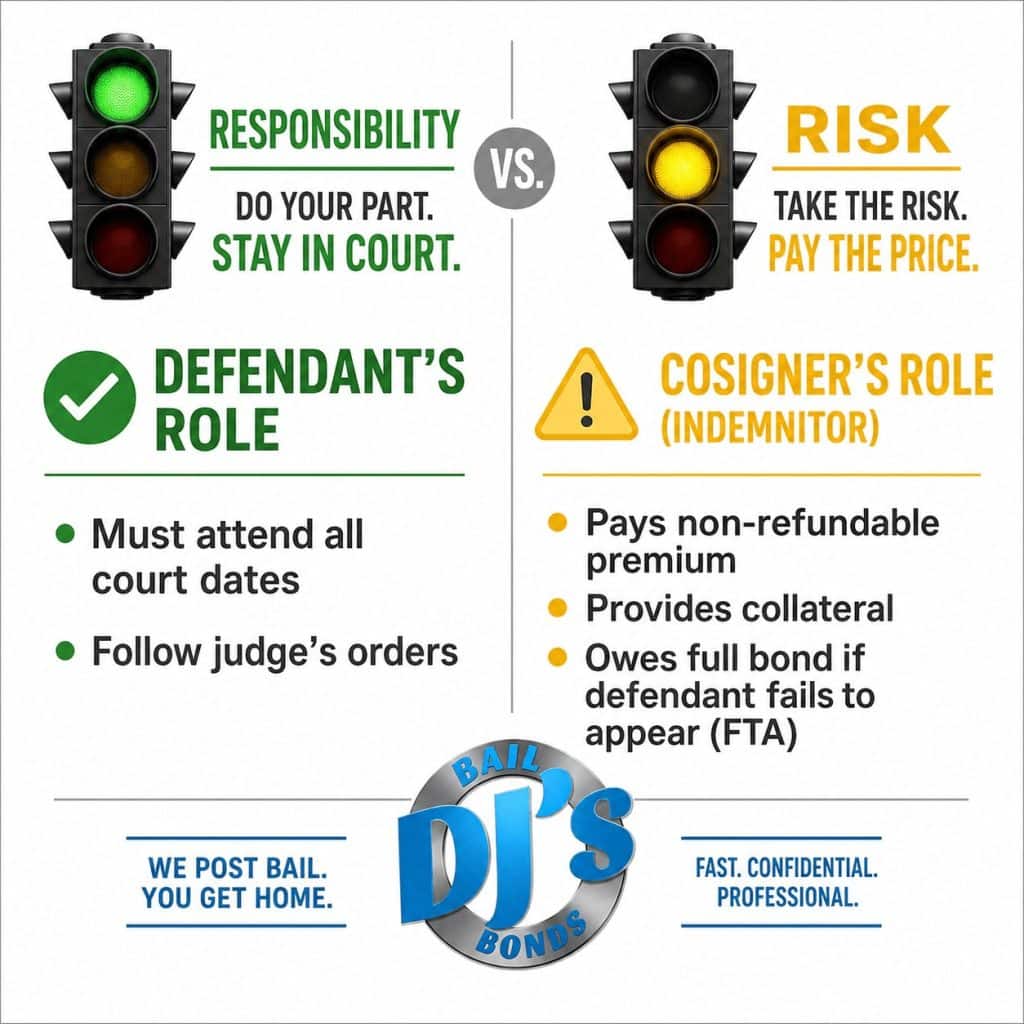
Under North Carolina law, a north carolina bail bond cosigner (legally called an indemnitor) is a person who signs a bail bond contract and agrees to be financially responsible if the defendant does not comply with court orders. The cosigner is essentially a guarantor. The bondsman relies on the cosigner’s credit, assets, and promise to help ensure the defendant returns to court.
Without a cosigner, many defendants – especially those with high bond amounts or previous failures to appear – would remain in jail. The cosigner makes release possible. But with that power comes serious responsibility.
Key Legal Definition
North Carolina General Statutes § 58-71-1 defines an indemnitor as “any person who is not an agent of a surety and who executes a bond as an indemnitor to the surety.” In plain English: you are backing up the bondsman with your own money and property.
Read the full statute at the North Carolina General Assembly website (Article 71 regulates bail bondsmen and indemnitors).
Your Responsibilities as a North Carolina Bail Bond Cosigner
When you sign as a north carolina bail bond cosigner, you are legally agreeing to four main duties:
1. Pay the Non-Refundable Premium
The premium (10-15% of the total bond) is due upfront. You are responsible for this payment, and it is not refundable – even if the defendant is found not guilty or the case is dismissed.
2. Ensure the Defendant Appears in Court
You must take reasonable steps to ensure the defendant attends every hearing. This includes reminding them of dates, providing transportation if needed, and notifying the bondsman immediately if the defendant plans to miss court.
3. Be Fully Liable for the Bond Amount If the Defendant Fails to Appear
If the defendant misses court and cannot be located within the 150-day forfeiture period, the court issues a final judgment against the bond. The bondsman pays the court, and then the bondsman can sue the cosigner for the full bond amount – not just the premium. This can be tens of thousands of dollars.
4. Provide Collateral and Risk Losing It
Many bonds require collateral (car title, property deed, jewelry). As a north carolina bail bond cosigner, you pledge that collateral. If the bond is forfeited, the bondsman can seize and sell your collateral to recover the loss.
The Financial Risks – How Much Can You Lose?
Most people understand they might lose the premium (e.g., $1,500 on a $10,000 bond). But the real risk is full bond forfeiture. Consider this example:
Bond amount: $50,000
Premium paid (10%): $5,000 (non-refundable)
Collateral pledged: Car worth $15,000
If the defendant fails to appear and cannot be found within 150 days, the court enters final forfeiture. The bondsman pays the court $50,000. Then, the bondsman will demand that the cosigner repay the full $50,000.
If the cosigner cannot pay, the bondsman may seize the car (worth $15,000) and may also sue for the remaining $35,000, potentially leading to wage garnishment or bank levies.
That is the worst-case scenario. It is rare, but it does happen. This is why being a North Carolina bail bond cosigner is not a decision to take lightly.
How to Protect Yourself as a North Carolina Bail Bond Cosigner
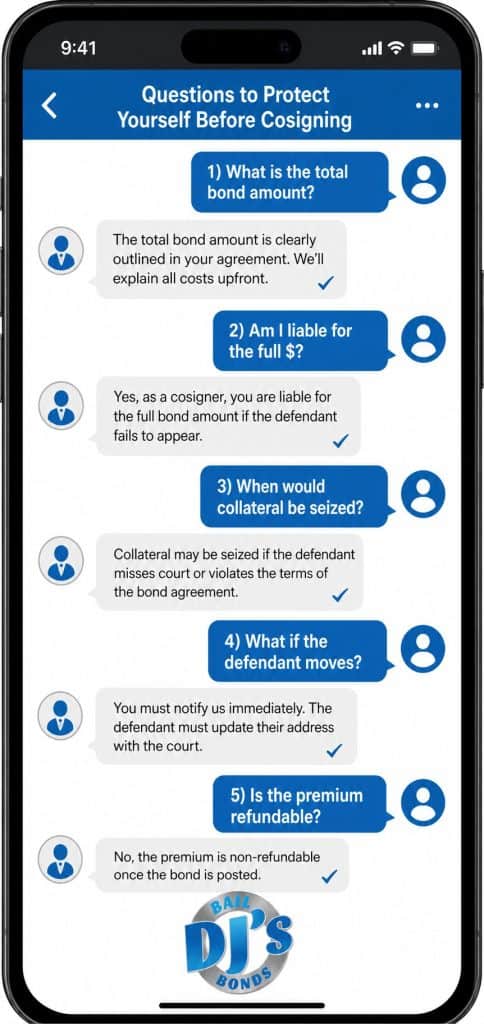
You can reduce your risk by following these six rules:
1. Know the Defendant Well
Only cosign for a family member or close friend you absolutely trust. Ask yourself: Have they missed court before? Do they have a job? Are they likely to flee?
2. Get Everything in Writing
The bond agreement should clearly state the bond amount, premium, collateral description, and forfeiture terms. Read it before signing. If anything is unclear, ask the bondsman to explain.
3. Keep a Copy of the Contract
You are entitled to a copy. Store it safely with other important documents.
4. Track All Court Dates
Write down every hearing date from the defendant’s paperwork. Use a calendar app with reminders. Call the clerk of court periodically to confirm dates have not changed.
5. Stay in Contact with the Defendant
Know where they live and work. If they stop answering calls or seem likely to run, notify the bondsman immediately. Early action can prevent forfeiture.
6. Communicate with the Bondsman
A good bondsman will help you monitor the case. At DJ’s Bail Bonds, we send reminders and work with cosigners to avoid surprises.
If the defendant misses court, read our guide: What Happens If You Miss a Court Date in North Carolina. It explains the 150-day forfeiture window and how to set aside a forfeiture.
What Happens If the Defendant Misses Court? Step by Step
Here is the exact process when a defendant fails to appear (FTA) and you are the north carolina bail bond cosigner:
Bench warrant issued – The judge orders law enforcement to arrest the defendant.
Forfeiture notice – The court sends a notice of bond forfeiture to the bondsman and cosigner.
150-day grace period – Under N.C. Gen. Stat. § 15A-544.4, the bondsman has 150 days to locate the defendant and bring them back to court. The cosigner may help with this effort.
Set aside – If the defendant is returned to court within 150 days, the forfeiture is set aside. However, the cosigner may still owe court costs and the bondsman’s location expenses.
Final judgment – If the defendant is not found, the court enters a final judgment for the full bond amount. The bondsman pays the court, then sues the cosigner for the same amount.
The North Carolina Department of Insurance provides consumer information about bond forfeiture and cosigner rights. Visit their Consumer Resources page.
Can You Withdraw as a Cosigner?
Generally, no. Once you sign the bond agreement and the defendant is released, you cannot simply change your mind. The contract is binding until the bond is exonerated (case closed with all appearances made). The only exceptions are:
The defendant voluntarily surrenders to jail and the bondsman agrees to release you.
The bond is exonerated early (rare, only if charges are dropped or defendant is transferred to federal custody).
Therefore, think carefully before signing. If you are unsure, ask the bondsman to explain the exit options – but assume you are committed for the duration of the case.
Why DJ’s Bail Bonds Is the Right Choice for Cosigners
At DJ’s Bail Bonds, we treat cosigners with respect and transparency. Since 2011, we have helped thousands of families navigate the bail process. Our cosigner-friendly policies include:
Clear, simple contracts – No hidden clauses.
Flexible payment plans – We work with your budget.
Court date reminders – We help you track appearances.
24/7 support – Call us anytime if you have concerns.
Becoming a north carolina bail bond cosigner is a big step. But with the right bondsman, you can protect your assets while helping your loved one get out of jail.
Thinking about cosigning a bail bond in North Carolina? Call DJ’s Bail Bonds first. We will explain every line of the contract, answer all your questions, and help you make an informed decision. Call 919-986-1547 now or visit our contact page. Your peace of mind matters to us.
FAQ: North Carolina Bail Bond Cosigner
What is a north carolina bail bond cosigner?
A cosigner (indemnitor) is a person who signs a bail bond contract and agrees to be financially responsible if the defendant fails to appear in court. The cosigner pays the premium and may provide collateral.
What are the main risks of being a north carolina bail bond cosigner?
The main risks are: losing the non-refundable premium, having collateral (car, house) seized, and being sued for the full bond amount if the defendant misses court and cannot be located.
Does a cosigner have to pay the full bond amount upfront?
No. The cosigner pays a non-refundable premium (10-15% of the bond). They only become liable for the full bond amount if the defendant fails to appear and the bond is forfeited.
Can I withdraw as a north carolina bail bond cosigner?
Generally, no. Once the bond is posted and the defendant is released, the cosigner agreement is binding until the case ends. There are very limited exceptions.
What happens to collateral if the defendant misses court?
If the bond is forfeited and becomes a final judgment, the bondsman can seize and sell the collateral to recover the bond amount. The cosigner may also owe any remaining balance.
Is the premium refundable if the case is dismissed?
No. The premium is a non-refundable service fee for posting the bond, regardless of the case outcome.
Do I need to be a family member to cosign?
No. Any financially responsible adult can be a cosigner, including friends, employers, or other relatives. However, the bondsman may require proof of income or assets.
What information does a bondsman need from a cosigner?
Typically: full name, address, employment information, social security number (for credit check), and details about any collateral being offered (vehicle title, property deed).
How can I protect myself as a north carolina bail bond cosigner?
Only cosign for someone you trust completely. Keep copies of all documents. Monitor court dates. Stay in contact with the defendant. Notify the bondsman immediately if the defendant goes missing.
Does DJ’s Bail Bonds offer payment plans for cosigners?
Yes. We work with cosigners to create flexible payment plans for the premium. We also accept collateral in place of a large down payment. Call 919-986-1547 to discuss your situation.